

Horse Physiotherapy in Dorset & South Wiltshire
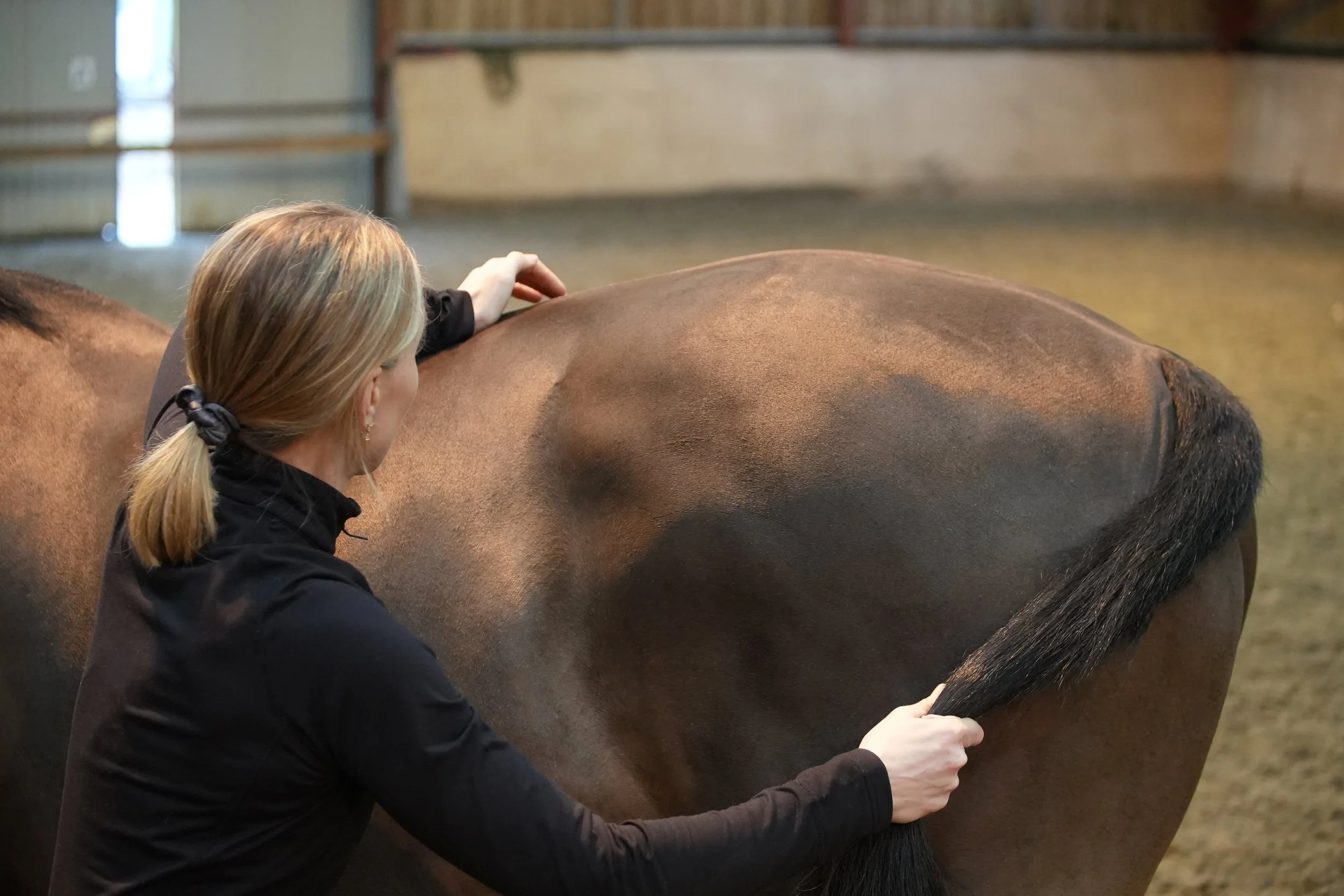
Physiotherapy can play an important role in supporting your horse’s comfort, movement, soundness and performance. Whether your horse is recovering from an injury, returning to work after veterinary treatment, experiencing stiffness or changes in movement, or you want to support their physical wellbeing and performance, our mobile equine physiotherapy service provides individualised assessment and treatment at your yard across Dorset and South Wiltshire.
Physiotherapy isn’t only for horses with an obvious injury. Regular assessment can help identify changes in movement, strength, flexibility or muscle development and support your horse throughout their ridden career.
Contact us for a free phone consultation to discuss how physiotherapy could support your horse’s comfort, movement, performance and overall wellbeing.
Common Signs Your Horse May Benefit From Physiotherapy
Changes in way of going, such as crookedness or heaviness on one rein
Difficulty striking off into canter or maintaining a consistent canter
Changes in performance, willingness or ability to work
Stiffness or reduced mobility following rest or box rest
Difficulty returning to work following injury or veterinary treatment
Reluctance or refusal to jump
Uncharacteristic behaviours such as bucking, biting, kicking, napping or resistance to work
Changes in posture, movement or coordination
Muscle imbalances, weakness or loss of muscle
Changes that may affect or be associated with saddle fit/shoeing
Conditions Commonly Supported Through Physiotherapy & Rehabilitation
Muscle, tendon and ligament injuries
Nerve injuries and neurological conditions
Osteoarthritis and degenerative joint conditions
Sacroiliac joint pain and dysfunction
Lumbosacral pain
Kissing spines (overriding or impinging dorsal spinous processes)
Neck and back pain
Acute and chronic musculoskeletal conditions
Lameness and altered movement
Post-operative and post-surgical rehabilitation
Rehabilitation following veterinary treatment or injury (Common examples include)
Steroid injections
DDFT/SDFT tears or ruptures
Interspinous Ligament Desmotomy
Annular ligament injuries
Joint Cysts
We tailor each treatment and rehabilitation plan to your horse’s individual needs, working collaboratively with your veterinary team and, where appropriate, your farrier, saddle fitter and trainer. This joined-up approach helps ensure that your horse’s comfort, movement, rehabilitation and performance are considered as part of the bigger picture.
If you notice changes in your horse’s movement, behaviour, performance or comfort, we recommend speaking with your vet. We work alongside veterinary professionals and other members of your horse’s support team to provide coordinated care.
“Excellent treatment for my welsh x pony, whom had kissing spine surgery sometime back. Rebecca helped me immensely with his rehabilitation and her ongoing care is invaluable!! Rebecca's knowledge is impeccable and she always has a smile and a wonderful presence .”
— Sarah Boulton